Please note: A focus on gender equality considers socially constructed roles, behaviours and attributes and often refers to men and women but includes all forms of gender identity and expression.
Gender equality is about removing barriers that do not enable equitable participation in the workplace. Everyone, regardless of their sex, sexual orientation, intersex status and gender identity, has the right to feel safe and respected.
Gender equality will lead us to a stronger, more inclusive, organisation, where our employees feel included and supported. Endeavour Foundation is committed to eliminating discrimination by analysing all workplace policies and practices to understand how they might affect people differently based on their gender. Amongst other metrics, we regularly review gender participation.

You can learn more by accessing the 2022 State of Gender Equality in Australia Report and 2024 Status of Women Report Card, or visit the Workplace Gender Equality Agency (WGEA).
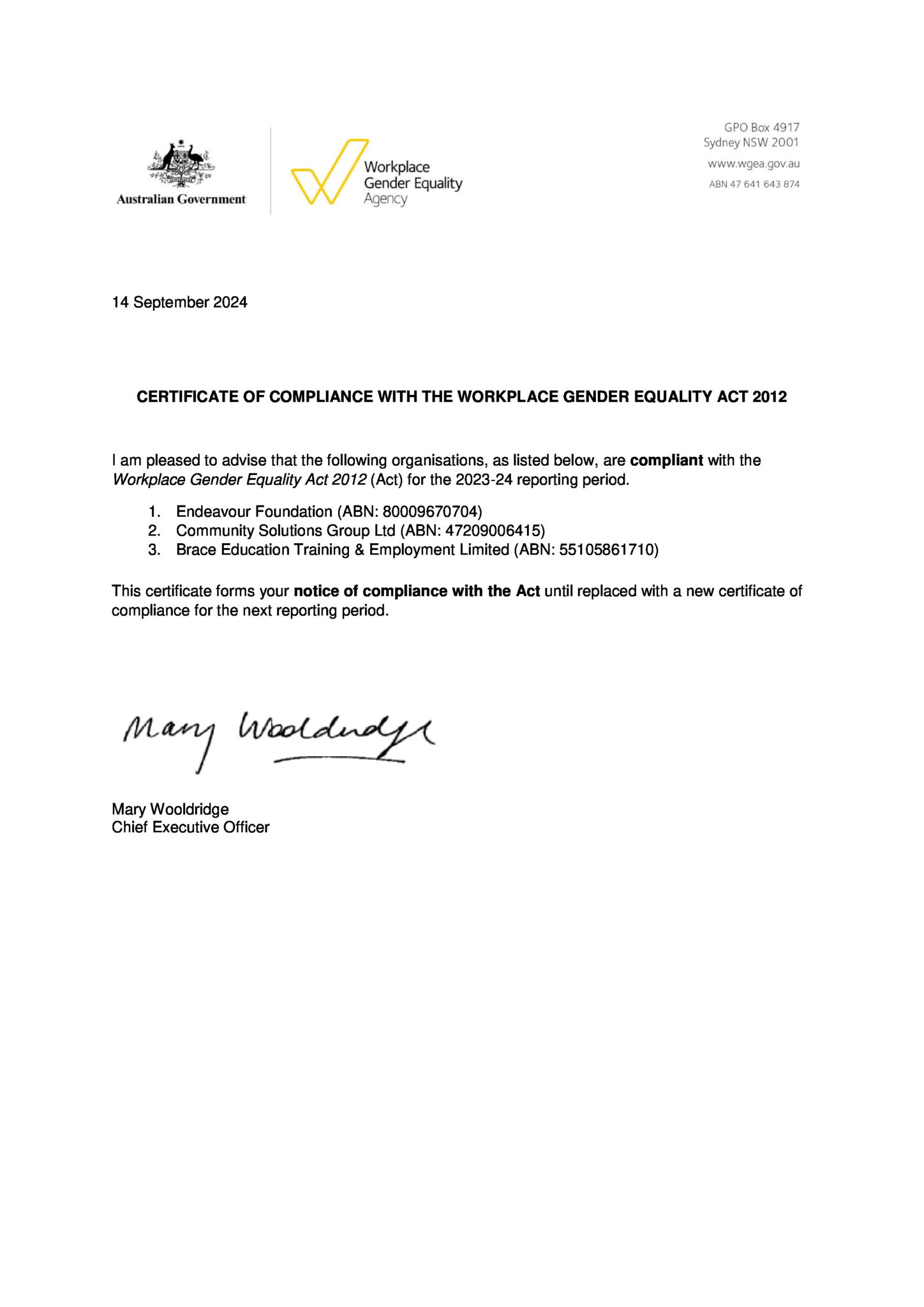
Workplace Gender Equality Act

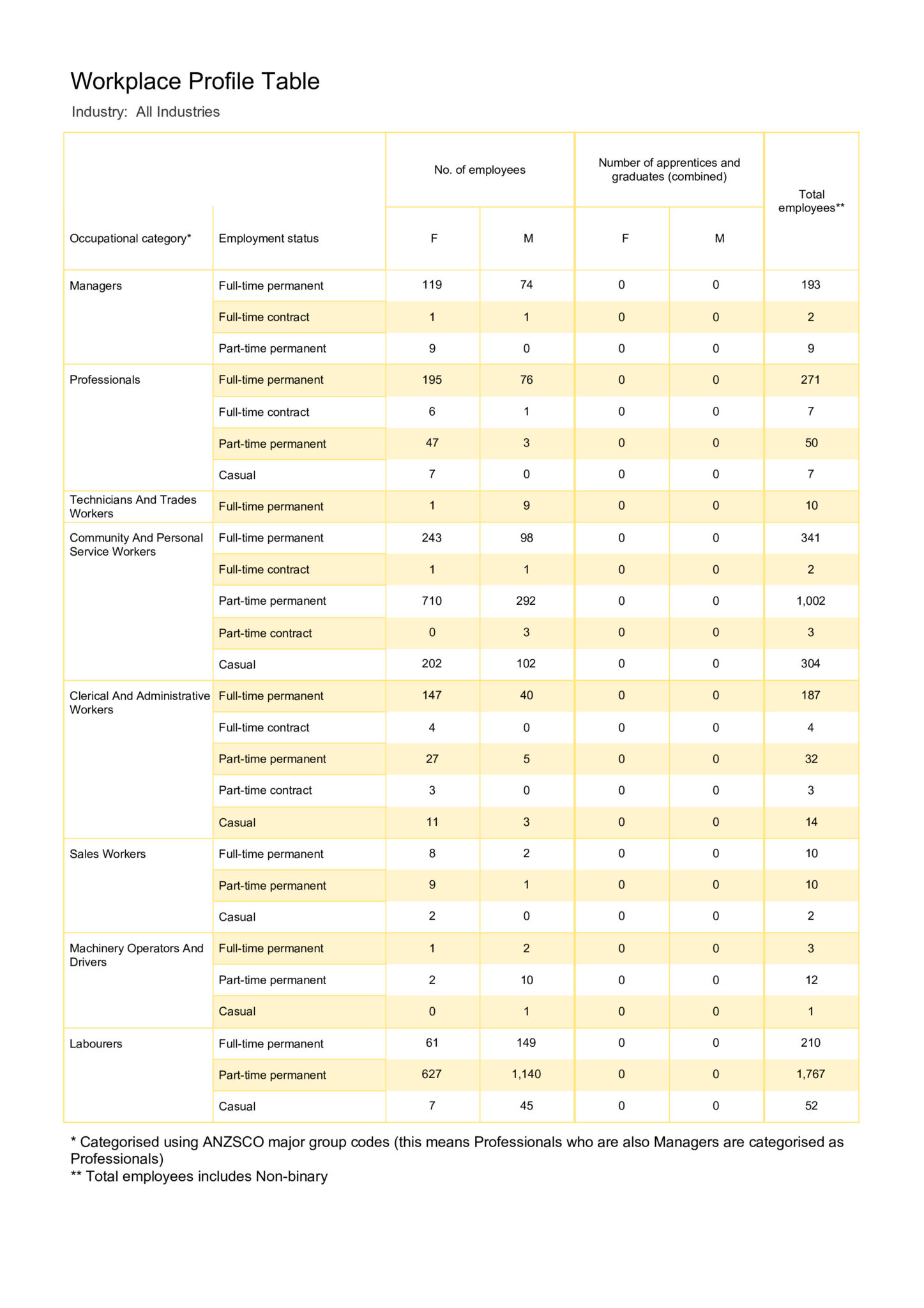
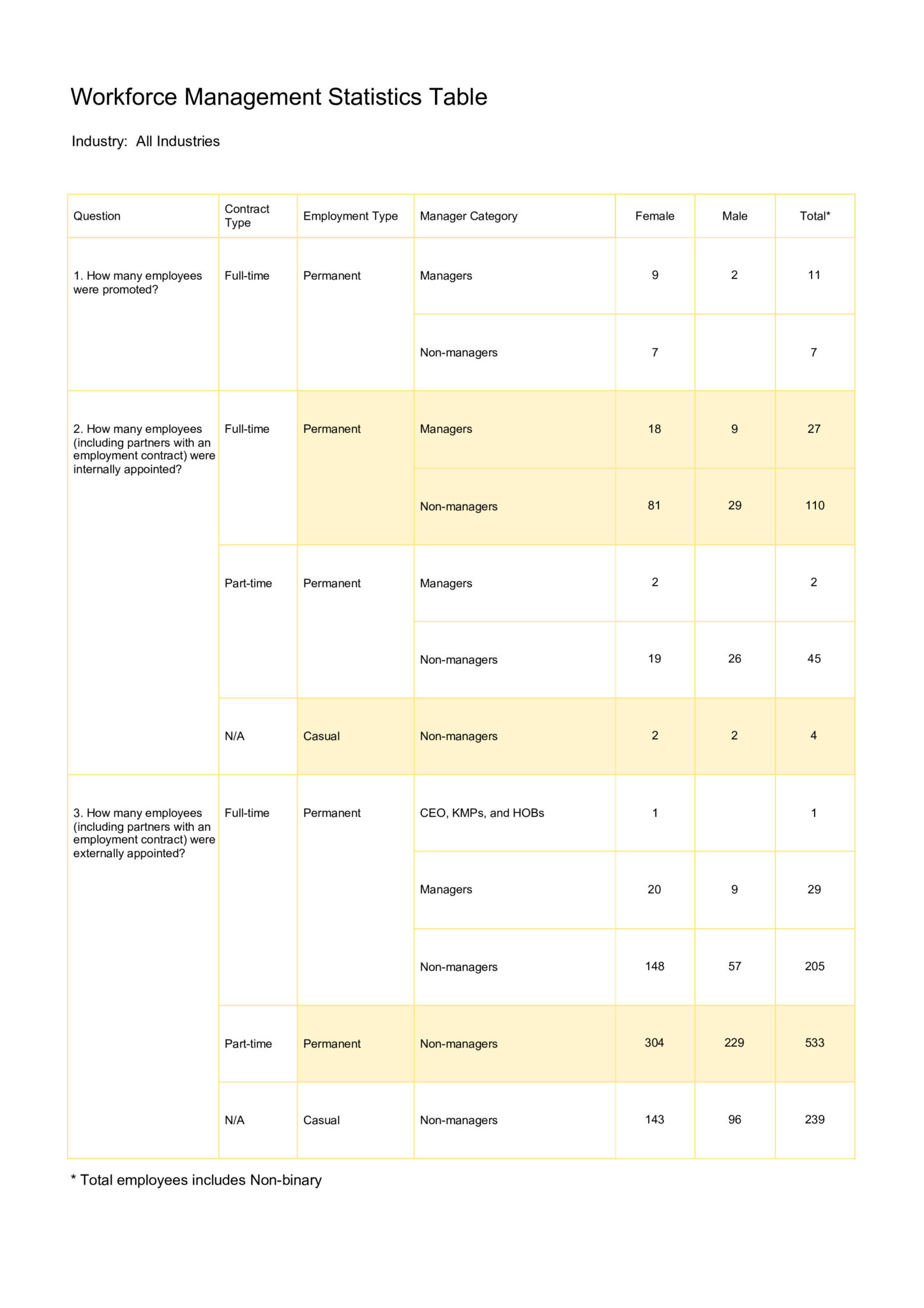
Each year, under the Workplace Gender Equality Act 2012, we lodge our public report with the Workplace Gender Equality Agency to document how we’re improving gender equality in the workplace.
The most current reports can be found here:
Sexual harassment and gender-based harassment and violence
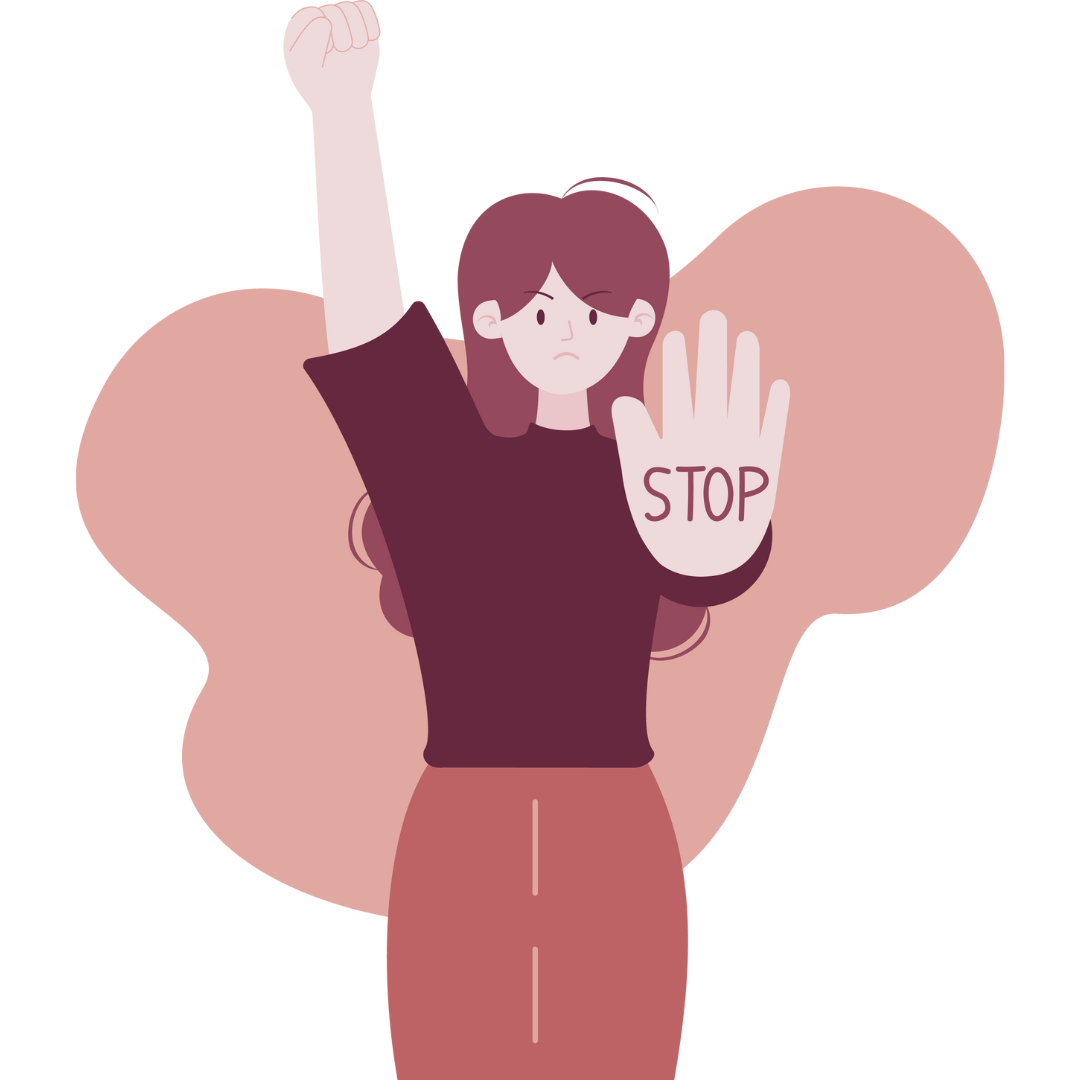
We work to create safe, respectful and harassment-free environments by preventing sexual harassment and gender-based harassment and violence. Sexual harassment and gender-based harassment and violence can happen for many reasons but power imbalances are a major factor. It can significantly impact an employee’s mental and physical health and may also affect focus, productivity, and overall performance at work.
View our Prevention Plan in response to Sexual Harassment and Sex or Gender-Based Harassment in the workplace.
Gender equality is not experienced in the same way by all women and men. Different dimensions of identity, including race, geography, sexuality, and disability can intersect and influence individual experiences and outcomes.
Older women and women with disability are often overlooked and invisible in current conversations about violence against women in Australia. Evidence from the Royal Commission into Violence, Abuse, Neglect and Exploitation of People with Disability revealed that women with disability experience domestic violence at about twice the rates than women without disability, and are more likely to experience sexual assault, stalking, violence or emotional abuse from a partner. 72% of women with psychological or intellectual disability over the age of 15 have experienced violence. This has to change.
How we can help

Family and Domestic Violence
The 15-minute Family and Domestic Violence Awareness in Australia – A Workplace Issue course provides information about family violence and its connection to the workplace, including how to recognise signs of family violence and how to support a co-worker who may be affected by family violence.
Fostering a culture of empathy and understanding we can help employees feel safe to seek help when they need it.
It’s never Okay! Family and Domestic Violence information and support for women with disability
We are really pleased to contribute to a Queensland Government video as part of a new Domestic and Family Violence awareness resource pack for women with disability.
The aim of the resources is to raise awareness for women with disability about Domestic and Family Violence (DFV), help them identify DFV and access support services.
A big thank you to Donna Brookes, a person we support, who participated in the video in a paid speaking role, delivering scripted lines telling women with disability that DFV is ‘never okay’.
Donna said, “It felt good being a part of this video.” Donna, who does not have personal experience with DFV, was fully supported throughout the process to ensure she was always informed and felt empowered in her decision to participate in the making of this important video.
Family and Domestic Violence Leave
We provide 10 days of paid Family and Domestic Violence Leave under the National Employment Standards (NES). More information can be found in our Leave Procedure.
For a private and confidential discussion, please contact People and Wellbeing.

Family and Domestic Violence Helpline
As part of our Converge Employee Assistance Program – discuss issues with a specialist counsellor and access support around family and domestic violence. Including access to counselling, referral to specialist services and assistance with planning for safety at work and at home: 1300 338 465.

Converge Employee Assistance Program (EAP)
Converge International understands that people face many challenges in their lives and that sometimes, these require specialised support. Converge offers a range of specialist phone helplines during business hours, in addition to its Employee Assistance Program services. Visit the Converge page for more information.

Parental and Carers Leave
The Diversity Council of Australia’s She’s Price(d)less: The Economics of the Gender Pay Gap report found that care, family and workforce participation is a key driver of the gender pay gap, accounting for 33% of the hourly gender pay gap. Our Parental Leave and Leave policies have been developed to encourage equitable responsibility regardless of gender or sexual orientation, allowing equal opportunities for families to work and take on caring and household responsibilities.
Feedback
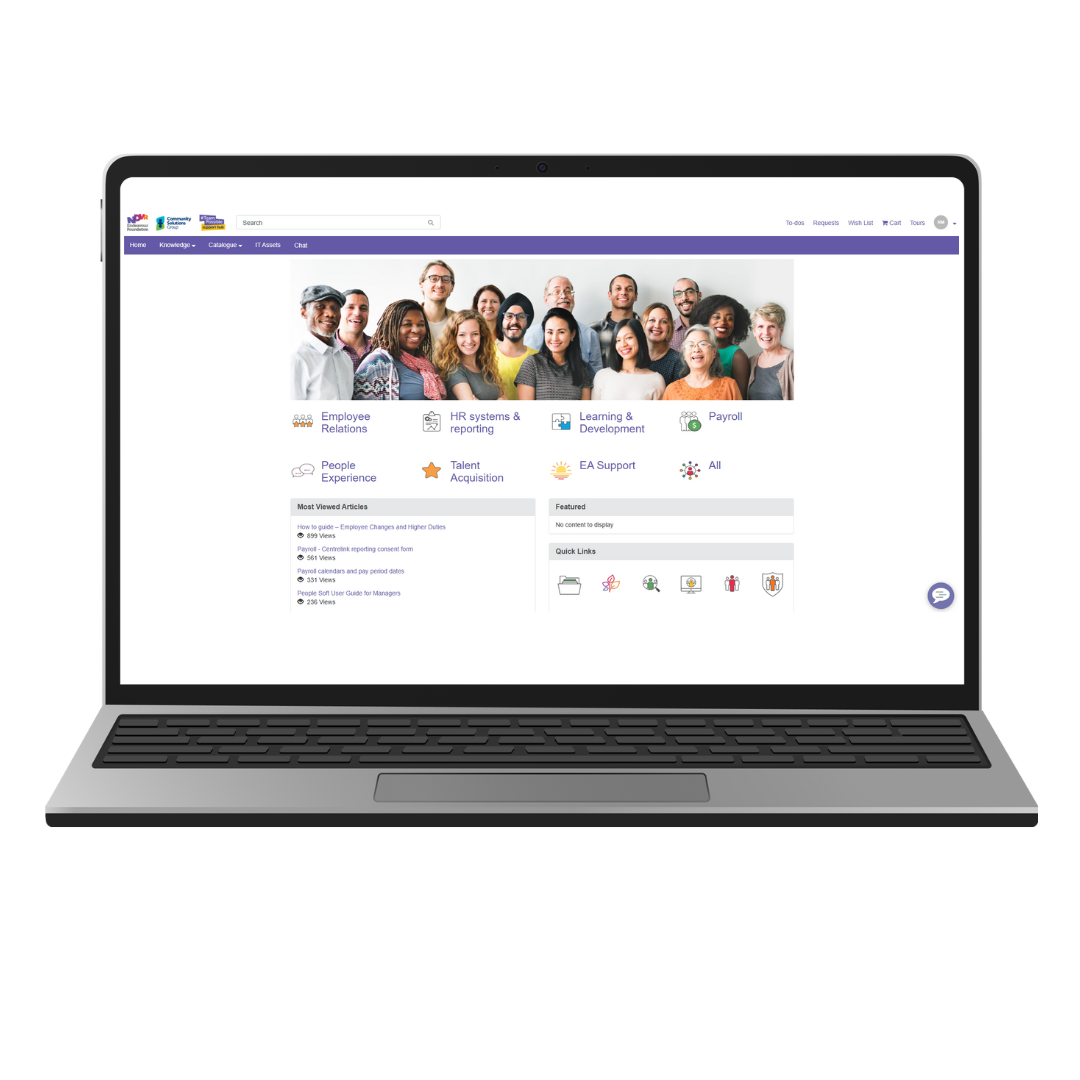
If you would like to give feedback about these documents, you can lodge a raise a ticket at the #TeamPossible Support Hub or contact the Workplace Gender Equality Agency.