National Reconciliation Week (27 May – 3 June) is a time to learn about:
📢 shared histories
📢 cultures
📢 our achievements.
It’s also the perfect moment to reflect on how we can contribute to a better, fairer country for all Australians.
To be truly successful, reconciliation has to live in our hearts, minds and actions. To move forward as a nation strengthened by respectful relationships between the wider Australian community and Aboriginal and Torres Strait Islander peoples, we must demand a more just, equitable and reconciled country for all.
This year’s National Reconciliation Week theme, ‘Be a voice for generations’, provides a platform for you to speak up and be heard!
One of the most impactful ways you can do this is to deliver meaningful Acknowledgement of Country just like this one (1 min):
Planning a meeting or event? Know what’s appropriate:
Welcome to Country
Acknowledgement of Country
| A Welcome to Country is a formal ceremony to welcome visitors to an Aboriginal Country. | An Acknowledgement of Country is a way of showing awareness of and respect for the Traditional Owners of the land and their long and continuing connection to Country. |
| A Traditional Owner of the land you are meeting on (usually an Elder) or an Aboriginal person with approval by the Traditional Owners. | Anyone can give an Acknowledgement of Country. It’s typically delivered by the first speaker at the beginning of an event. |
| Major public events, forums and functions. | Formal meetings, internally and at smaller events. You can do an Acknowledgement of Country at larger events if a Traditional Owner is unavailable. |
| At the opening of the event as the first item on the program. | At the beginning of an event, or in response to a Welcome to Country. You don’t have to give an Acknowledgement of Country multiple times throughout a meeting or event. |
| It can take many forms including singing, dancing, smoking ceremonies or a speech in traditional language or English. | Speech at a meeting or event, or written (e.g. on our newsletters and website). |


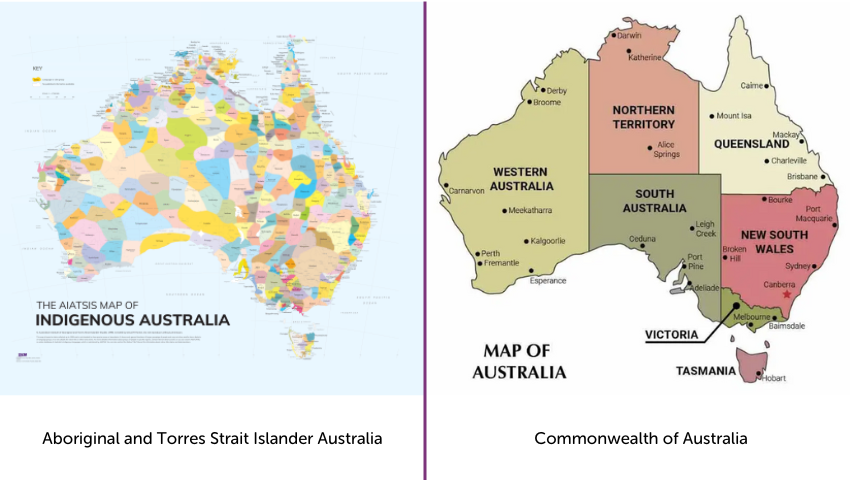
Tip: Curious about the Country or land you’re currently on or want to discover the name of the land where your event is being held?
Zoom in on the AIATSIS map of Indigenous Australia to find the name of the Traditional Owners. Email [email protected] if you have any questions.

Tip: To organise a Welcome to Country visit the Australian Government’s National Indigenous Australians Agency webpage and contact an office in the area where the event is taking place.
Download this Easy Read to empower people we support to have a better understanding of Acknowledgement of Country, why it’s important and how to give one.
Download an Acknowledgement of Country poster to print and display at the entrance of your site.
How do I deliver a meaningful Acknowledgement?

During National Reconciliation Week we invite you to deliver your meaningful Acknowledgement of Country at any event or gathering you choose during this important week.
Express your respect and gratitude to the Traditional Owners of the land at your next:
- Team meeting (face-to-face or online)
- Working group meeting
- Stakeholder meeting (committee or board meeting)
- An event such as a My Home, My Life Welcome Home or lottery draw


When delivering your Acknowledgement of Country, the most important thing to remember is that there is no ‘right’ way. It just needs to come from the heart and show gratitude and respect to the Traditional Owners of the land. So, let your words flow sincerely and authentically, acknowledging the significance and importance of the land you stand on.
Ask yourself:
💬 Who are the Traditional Owners of the land? What’s their story?
💬 What’s my story? What’s my connection to this land?
An Acknowledgement of Country must:
📢 Name the Traditional Owners of the land or Country you are on.
📢 Identify the Traditional Owners and their continued connection to their land(s).
📢 Pay respect to Elders past and present and also to any Aboriginal and Torres Strait Islander people present or listening.
For inspiration, listen to these clips of meaningful Acknowledgements of Country from your colleagues.
- Diego Casilimas Charry, Logistics Manager, Wacol Social Enterprise:

Hello team. It is a beautiful morning today in Meanjin, otherwise known as Brisbane. I first would like to thank the Turrbal and Jagera people for the land that we work on. I give respect to Elders past and present, and pass that respect on to our Aboriginal and Torres Strait Islander teammates. Let’s have a wonderful day and remember that we are working on Aboriginal land.
- Employees we support – Tina Kelly, Tina Taylor and Michael Taylor from Wacol Social Enterprise:
Here is the land, here is the sky. Here are my workmates and here am I. We work at Wacol Business Solutions. We would like to thank the Turrbal and Jagera people for the land on which we work and learn. We give respect to Elders past and present. We give respect to our Aboriginal and Torres Strait Islander teammates. And we give respect to each other here on Turrbal and Jagera soil.
- CEO, David Swain at the beginning of a virtual meeting at Support Centre:
I first want to acknowledge the Traditional Owners of the land on which we meet, and I’m sure that we’re meeting from all over the place, given that we’re virtual. For me that’s the lands of the Jagera people to the south of the Brisbane river. I also acknowledge the Turrbal people to the north of the Brisbane river. And pay respects to Elders past and present. Feel free to recognise the land that you’re coming to us from as well in the chat function.
- Vanessa Tan, Communications and Content Advisor at the beginning of an in-person meeting:
Good morning everyone. First off, I’d like to start by sharing a little bit about me. I was born in the lands of the Whadjuk people (Traditional Owners of Country in Perth). Lived on the lands of the Wurundjeri people (Traditional Owners of Country in Melbourne). And reside on the lands of the Kombumerri people (Traditional Owners of Country on the Gold Coast).
I also acknowledge the Traditional Owners and Custodians of the land I am speaking from today, the Turrbal and Jagera people (Brisbane/Meanjin) and their continuing connection to land, sea and community. I pay my respects to Elders, past and present and I commit to the spirit of the meaningful reconciliation between Aboriginal and Torres Strait Islander peoples and non-Indigenous Australians. I also extend this respect to any Aboriginal and Torres Strait Islander people present today.
In her TEDx talk, Djiribul woman of far north Queensland, Shelley Reys, explains how to give a meaningful Acknowledgement of Country without feeling pressured to say the ‘right thing’ (9 min).
Make it your own. Free yourself of this idea that there is only one way to deliver an Acknowledgement of Country. Get rid of all of those standard lines that everyone else uses for fear that they’re going to get it wrong. Just make it your own. Because when you make it your own, it’s personal. And when it’s personal, it’s meaningful. And when it’s meaningful, it could never sound like the bit you have to say to get to the real reason you are gathered today. Give it a try this week.
Our reconciliation progress
While our efforts have remained focused on our Reflect Reconciliation Action Plan (RAP) we are excited to move towards the Innovate RAP stage where we strive to deepen our understanding of our influence and determine how we can best contribute to advancing reconciliation.

Here’s what we’ve accomplished so far:
- Launched an annual Census to gauge our workforce culture and diversity. From this, we discovered that nearly 3.5 percent of our employees identify as Aboriginal and Torres Strait Islanders. We are dedicated to fostering a safe and respectful environment for people.
- We have become members of Supply Nation, aiming to increase the number of Aboriginal and Torres Strait Islander suppliers we engage with.
- A Reconciliation Working Group was established to govern and implement our RAP activities, ensuring accountability and progress.
- We have developed an Indigenous Cultural Learning Module designed to educate our employees on the significance and benefits of cultural diversity within our workplace.
If you have any questions or feedback, please email the RAP Working Group at [email protected]. Your input is highly valued.
Get involved
We invite you to attend a local National Reconciliation Week event and complete the cultural awareness training on Engage. These opportunities will help you deepen your understanding and contribute to our shared journey of reconciliation.
Please visit Reconciliation Australia’s website for more information about National Reconciliation Week.
News
View all
Director Election Expression of Interest

Are you in email overload?
Grant funding brings new life to Alex Hills L&L

BRACE proposed changes

Fire Services – Chubb Fire & Security is our new provider