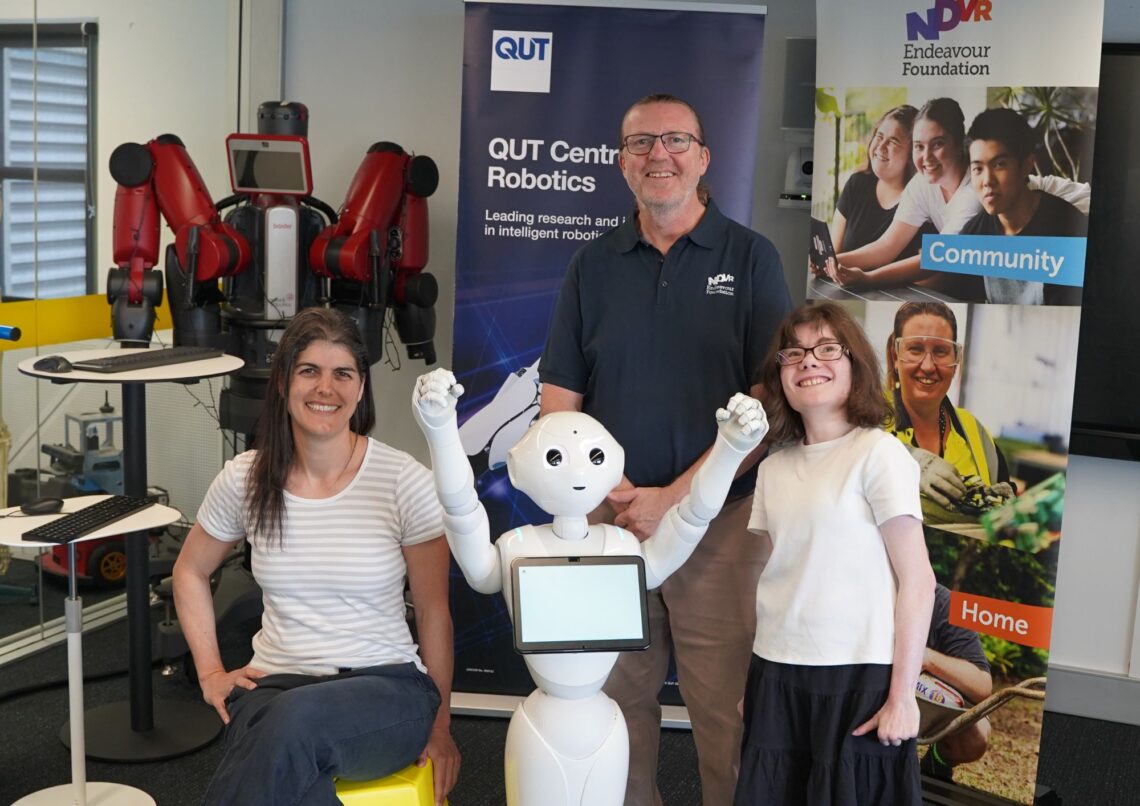
We’ve got some stellar news to share—literally! Recently, people we support at Bowen Hills L&L and Castle Hill L&L had the pleasure of hosting special guest, Lauren Fell, Outreach Coordinator for Lunar Outpost Oceania, alongside Service Design and Implementation Partner, Chris Beaumont at their sites.
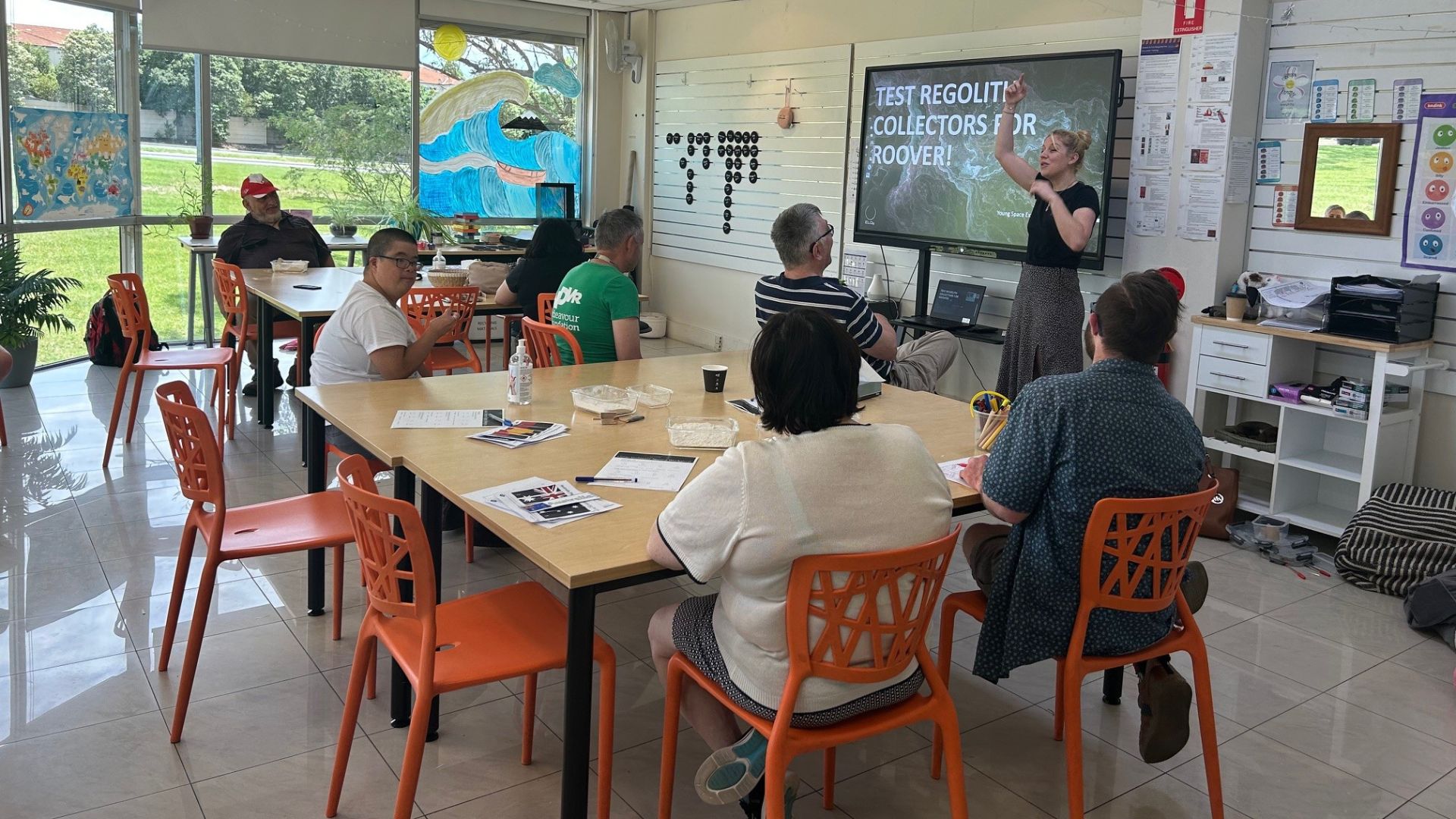
So, what’s the scoop?
Australia is embarking on a mission to scoop up and deliver lunar dust on the Moon’s surface.
Why, you ask? Well firstly, there is no oxygen on the Moon, meaning astronauts need to bring their own oxygen tanks. Secondly, sending a single kilogram to the Moon can cost a massive $1.5 million! Oxygen can also be used as rocket fuel!
“Space is a unique environment – it’s at the frontier of anything humans have direct experience of. Lauren said.
“Because of this, no matter how much study and training we have done, there is still so much that we can’t anticipate.”
To tackle this astronomical problem, the Australian Space Agency is getting ready to dispatch “Roo-ver,” the first-ever Australian space rover, to collect the lunar dust. This will be delivered to a NASA facility on the lunar surface to extract oxygen from the lunar dust. The goal of this mission is to reduce the high costs associated with transporting supplies to the Moon, by eliminating the need to transport oxygen tanks.
But first they need something to collect the dust with.
In 2023 the ELO2 Big Dipper Challenge was initiated, encouraging the public to submit prototype ideas to attach onto Roo-ver to collect the lunar dust. Ten winners were selected which consisted of individuals and teams from a range of backgrounds and ages. In addition, two prototypes were also created designed only by artificial intelligence (AI).
What is our involvement?
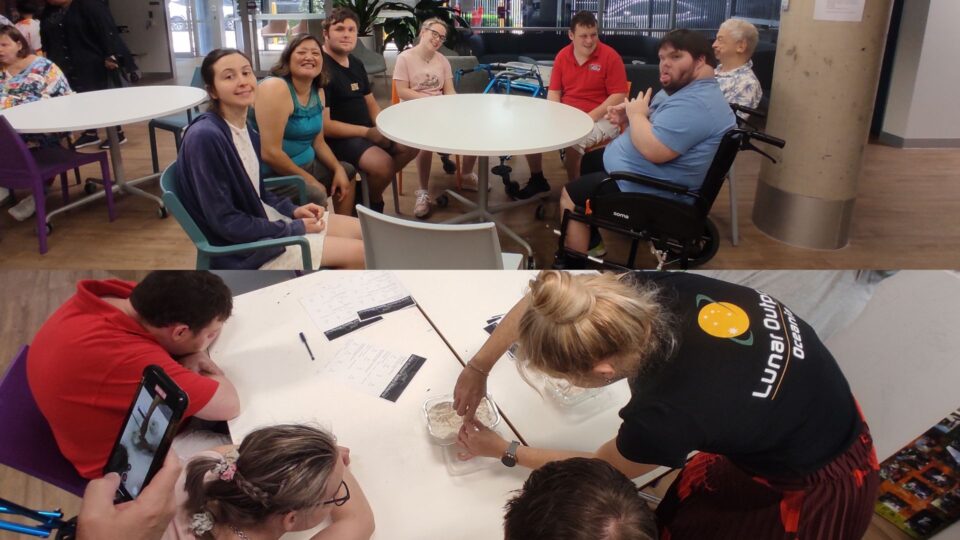
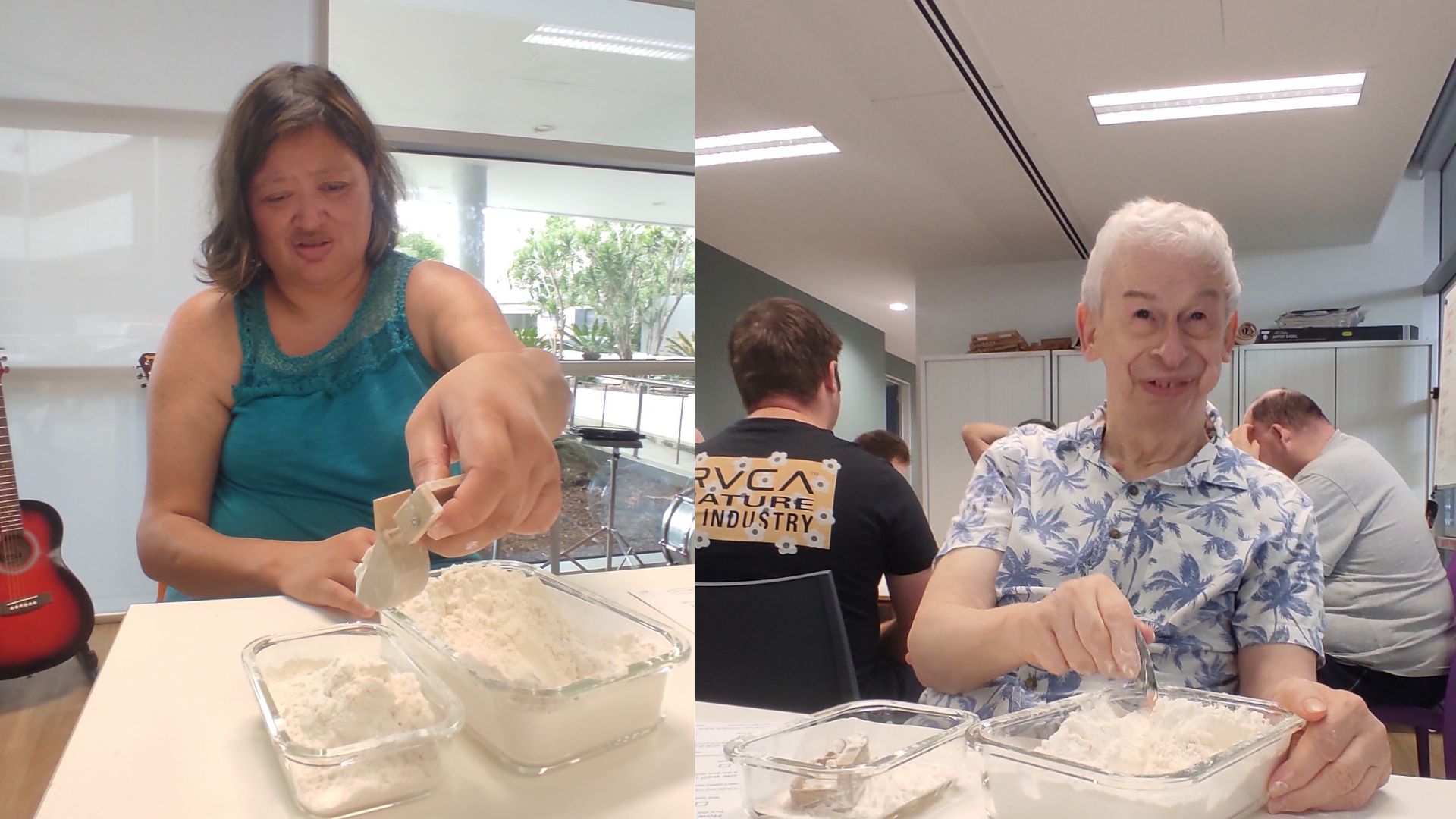
People we support played a crucial role in testing and providing valuable feedback on each prototype’s performance, evaluating them in terms of how well they collect, hold and pour the lunar dust. Their insights will even contribute to the final concept design!
“Involving and learning from diverse individuals – including individuals with intellectual disabilities – opens up the full capacity of human creativity, exploration and curiosity, which will be vital as we explore further into the universe.” Lauren said.
“It was fun!” said Bev from Bowen Hills L&L, capturing the spirit of the workshops as each site got hands on with the five gadgets.
“There were a number of very important points raised by Endeavour Foundation participants that may have only been discovered through hands-on testing, and the feedback they provided will help us determine the best parts of the designs as well as where improvements are needed.” Lauren said.
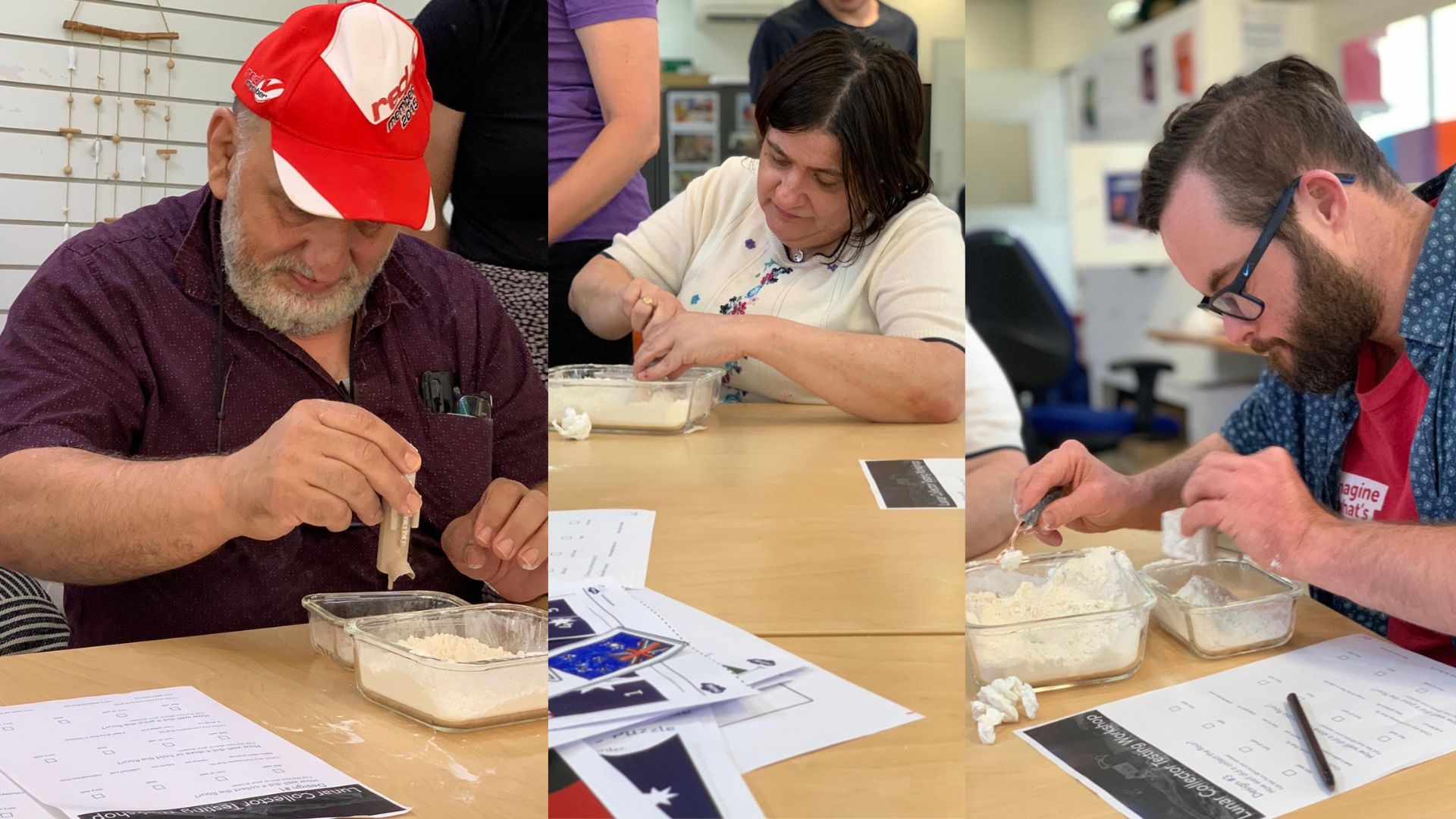
And here’s a sneak peek behind the scenes — Both Bowen Hills L&L and Castle Hill L&L preferred the Super Duper Lunar Scooper! Designed by a genius 12-year-old, this prototype stole the show with its simplicity and effectiveness in collecting lunar dust.
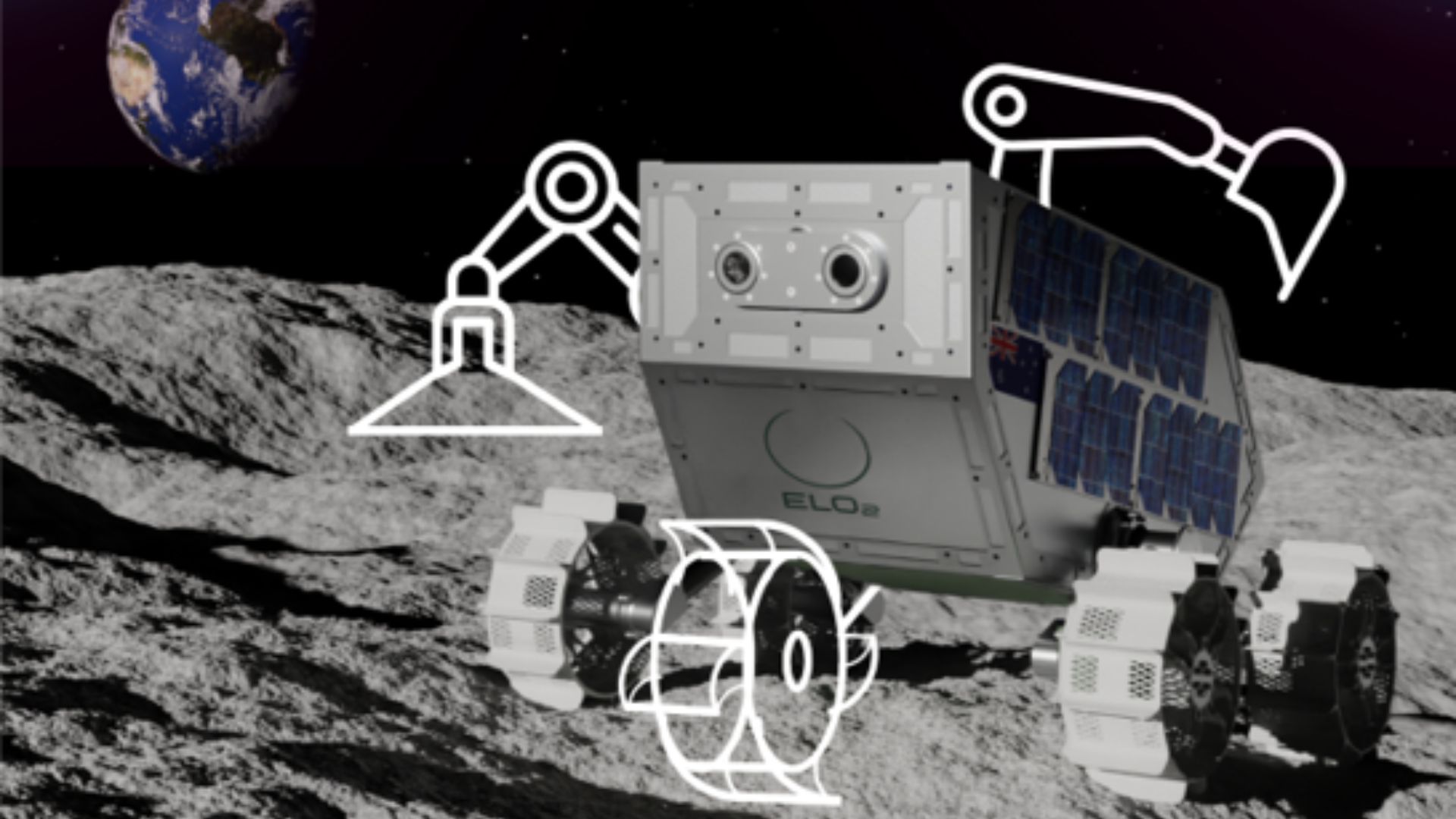
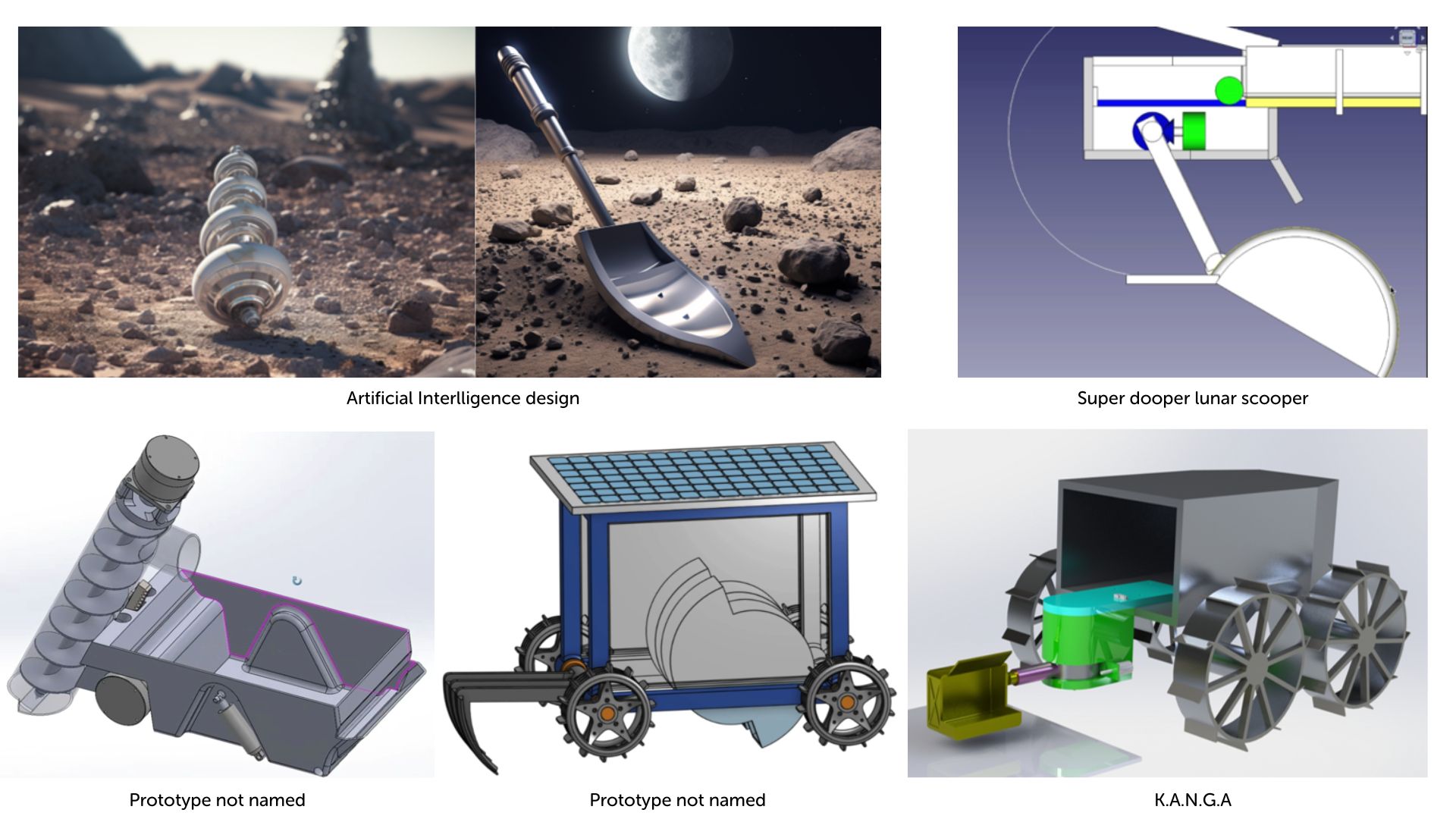
Insights from the testing workshops have been fed into the data packets that solvers will use in the next phase of the open innovation challenge.
Solvers will be tasked with using these insights, along with feedback from judges on the designs that were tested, to create a set of design recommendations for future lunar dust collection designs.
Huge shoutout to our amazing testers for their invaluable insights into this exciting initiative.
Prototype update
Lauren and the team were back visiting Bowen Hills L&L showing off the chosen prototype which they’ve attached to a prototype of the Roo-ver. Watch an excited Jayden and Andrew chat to Channel 10 about how they enjoyed being involved in the project.
Stay tuned! The Australian Space Agency will decide between this prototype and another one from Western Australia by the end of 2024, with the final design shooting off to the moon in late 2027 early 2028.
News
View all
Director Election Expression of Interest

Are you in email overload?
Grant funding brings new life to Alex Hills L&L

BRACE proposed changes

Fire Services – Chubb Fire & Security is our new provider