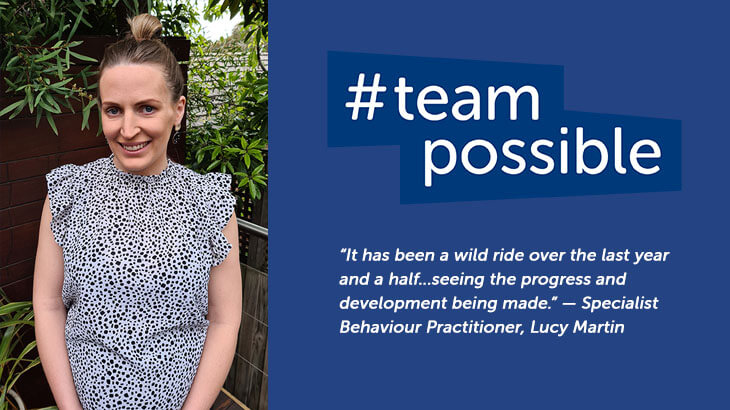
Community Solutions, Specialist Behaviour Support Practitioner Lucy Martin started supporting Declan and Guy at their Supported Living Accommodation (SIL) home in 2021 and became skilled at adapting and readapting to new situations.
It has been a wild ride over the last 18 months, being present through managerial changes and seeing the home and participants progress and develop. I learned a lot about personal care, how to communicate effectively with participants, and the strengths and downfalls of the independent living model..
Declan’s journey

Declan, 30, had a rough time moving around different houses, even living in high physical support needs home for people in wheelchairs, because of his various behavioural issues. When Lucy started working with him, he was misunderstood and lacked essential support.
Declan is a complex client where he required a very holistic approach with his care, with everyone working together.
Lucy identified that boredom often triggered Declan’s concerning behaviour. Declan has oppositional tendencies, and mixed with COVID lockdowns and boredom, Declan’s behaviour escalated. He would provoke staff, who would take things away from him and give him food as a solution, which Lucy recognised was not the answer.
He just wanted to be noticed. He wanted to spend time with them, and he wanted to be able to communicate, but he didn’t have the communication skills.

Lucy proposed strategies to Declan’s care team to encourage a different perspective, rather than dismissing him with food, resulting in his concerning behaviours reducing.
Instead of staff handing Declan food at the house, they would spend time with him, engage him in a task or play with his toys instead. That was much more effective than ignoring him, which proved to further prompt his challenging behaviour.
Declan thrives
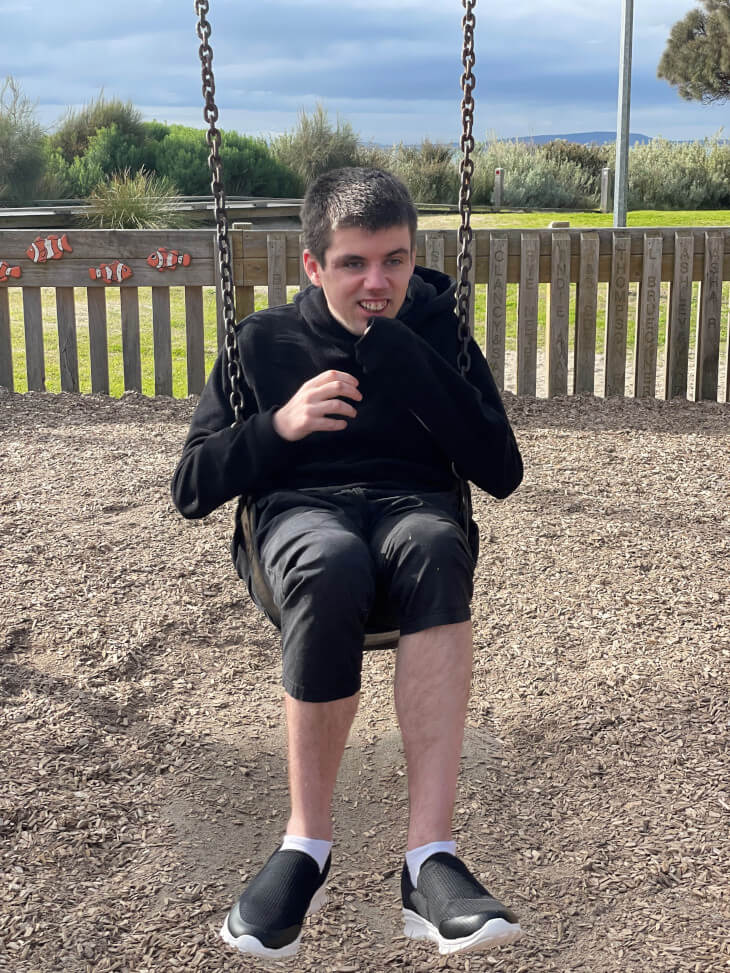
Lucy recognised that Declan does not thrive in group settings and needs a more tailored and one-on-one support plan, so Lucy worked to change Declan from his day programs to having one-to-one support at home instead.
He is now funded to receive five days of one-to-one with external support workers at home, which is a massive win as getting NDIS funding for one-on-one support can be challenging.
He is on the way to building more productive methods of communicating and being understood, is learning to use a toilet, self-harming dramatically less, and is accessing the community with appropriate support, more than he ever has before.
What’s next for Declan?
Through a collaborative effort between Lucy and the care team; they advocated for Declan to live alone because where he was living was not suitable.
I tracked declining behaviour over three months, highlighting the impact on other residents, to demonstrate that he was not suitable living with other people, and how living alone in a robust house would benefit Declan based on levels of attention and staffing
As a result, Declan was approved to have his own new home, which is currently being built. He will have one-to-one support 24 hours a day, another outstanding achievement.
With Declan, it’s not just that his behaviours of concern have reduced over the last 18 months. It’s that his life has changed. His housing and home support changed, he’s not in an unsuitable day program, and his behaviours of concern reduced because he’s happier, not anxious and not feeling neglected. He is happy now.
Guy’s journey
Guy, a gentle soul who also lives at SIL home, has seen some exciting developments over the past year. Very relaxed, a sock lover and fashionista, Guy, unfortunately, has been under restrictive environmental practices as he was labelled a ‘wandering risk’ for one incident that happened several years ago.
Guys reassessment
Unfortunately, despite no further incidents, Guy was never reassessed for the potentiality of risk, but Lucy questioned whether the practices were still necessary and championed a removal of all Guy’s restrictions.

He likes to sit around the door a lot. So, I just thought, it seems like an assumption to think that he’s going to try and escape. Maybe he’s sitting there for a different reason
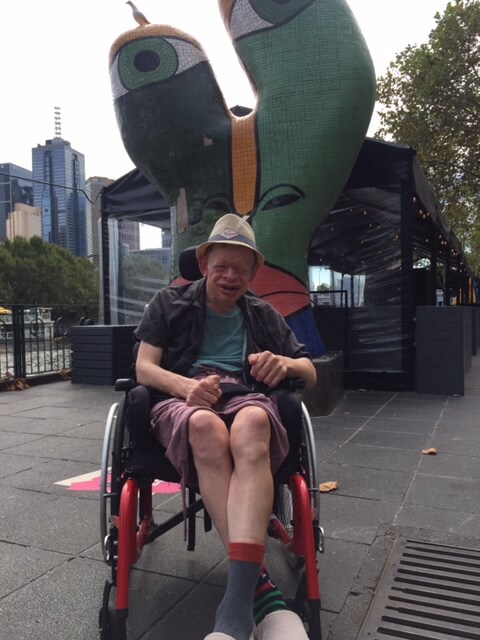
Lucy started tracking his movements, sending the house team an Excel spreadsheet to be completed daily, and tracking the number of times Guy tried to touch or get out of the door.
Over a couple of months, there were no reports of his wanting or trying to leave. Instead, he just liked to sit at the door to see who was coming and going
During her time with Guy, Lucy realised what he liked to do, so developed photos of him sitting next to the front door, at the letterbox, going for a walk, on the bus and sitting in the garden. She asked the staff to reinforce to Guy to point to the picture to see if there was an activity he would like to do.
This has resulted in the home no longer needing to be kept locked because Guy is not a wandering risk.
Having the open-door policy for Guy, who has been institutionalised his whole life, is extremely profound

News
View all
Director Election Expression of Interest

Are you in email overload?
Grant funding brings new life to Alex Hills L&L

BRACE proposed changes

Fire Services – Chubb Fire & Security is our new provider