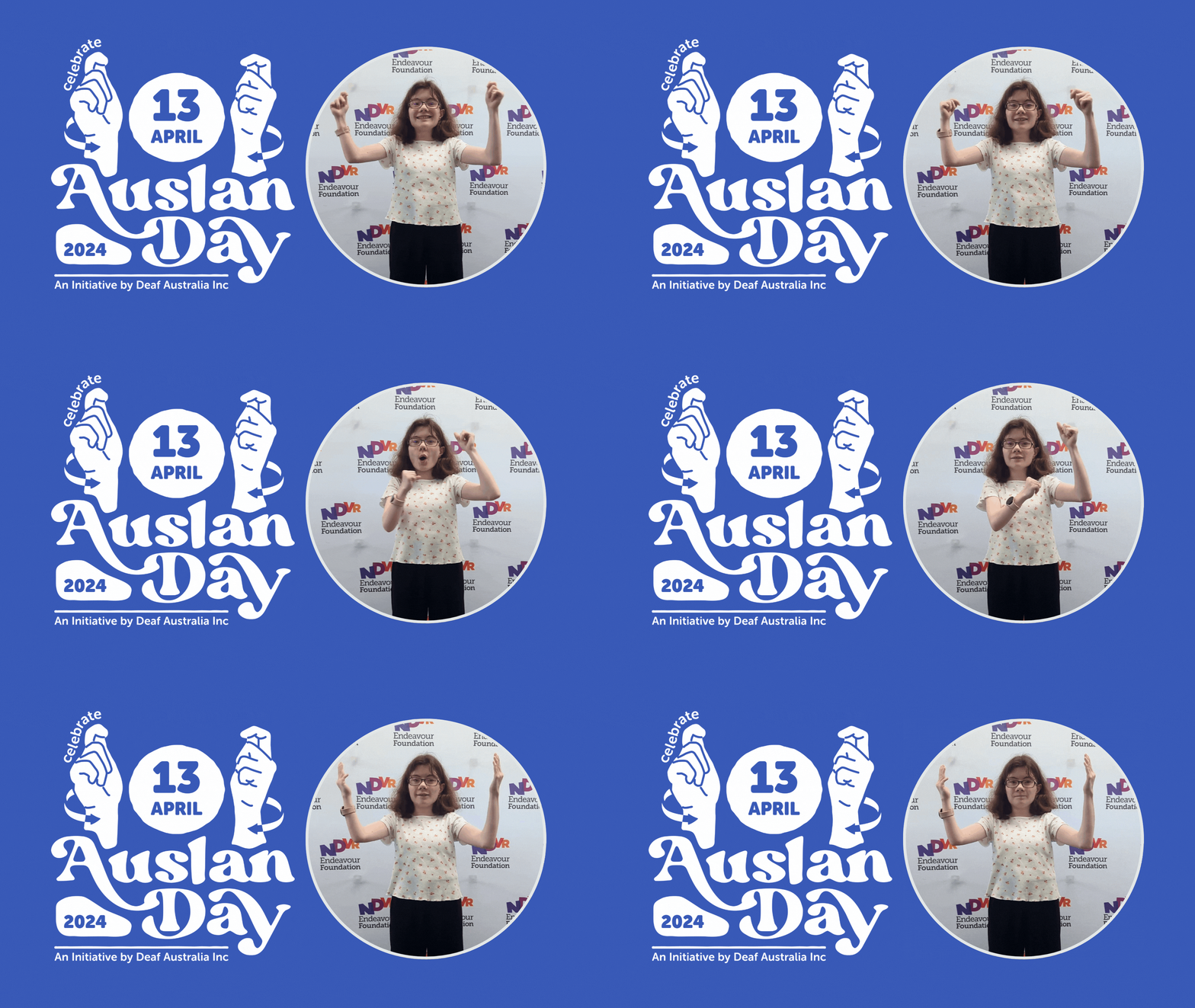
Auslan Day on 13 April, each year, celebrates the rich history, culture, community and language of the Australian Deaf community by honouring the date of the first publication of the Auslan dictionary. Auslan Day is an initiative of Deaf Australia.
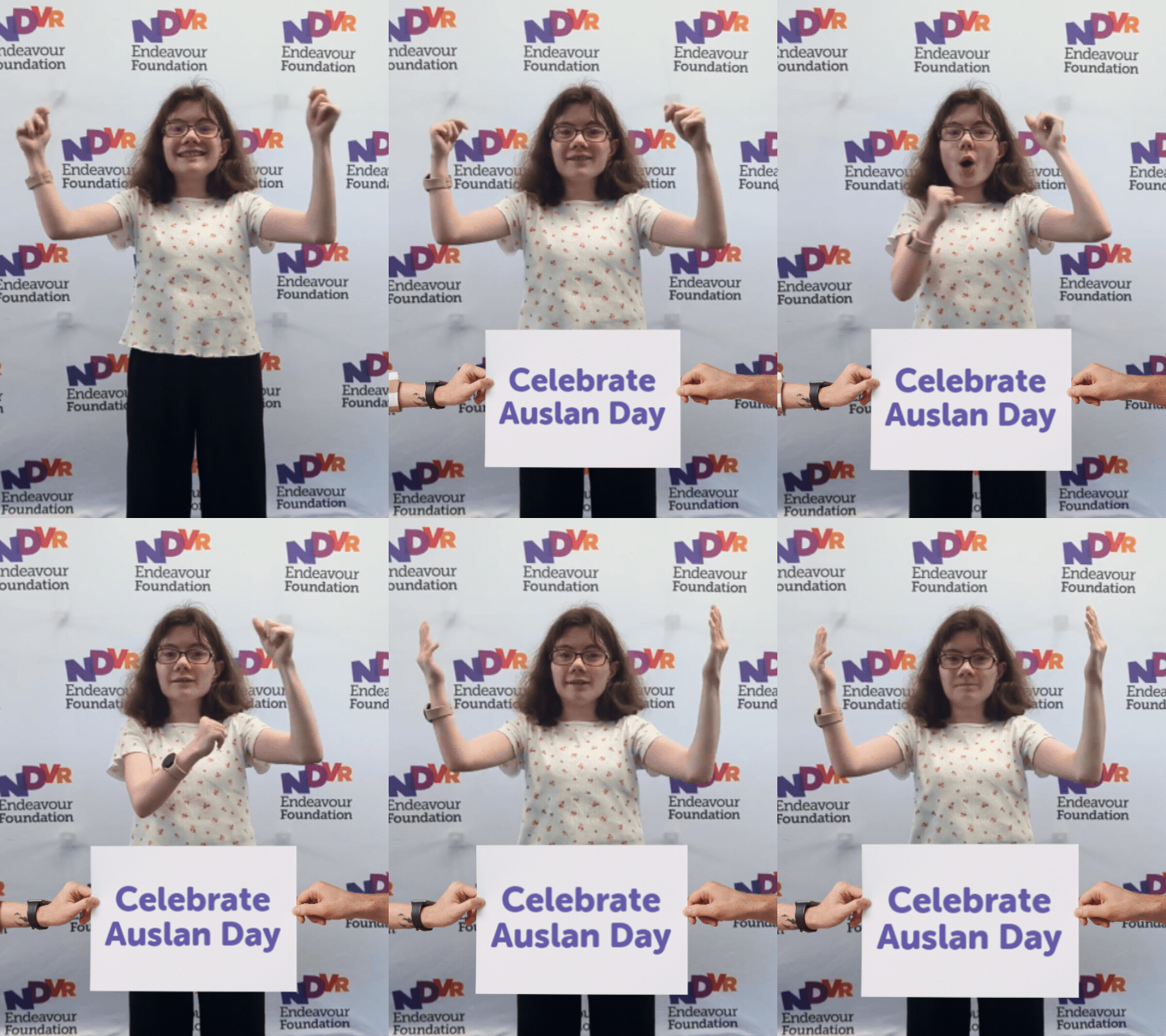
Since experiencing gradual hearing loss, Administration Assistant and Alex Hills Learning and Lifestyle (L&L) hub’s Chloe Haidenhofer has been learning Auslan.
Now, as a member of the Deaf community, Chloe is teaching others Auslan to foster mutual understanding and respect between hearing and d/Deaf individuals.
Her popular ‘Learn Auslan with Chloe’ video series has enabled employees to address communication barriers and better understand the needs and preferences of people we support .
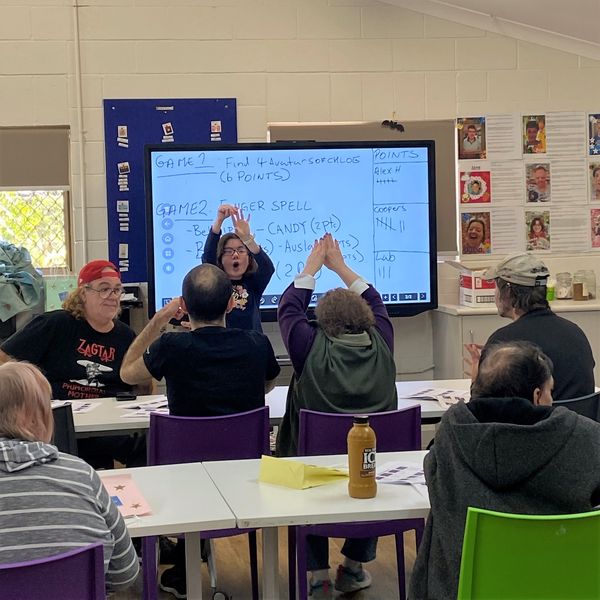
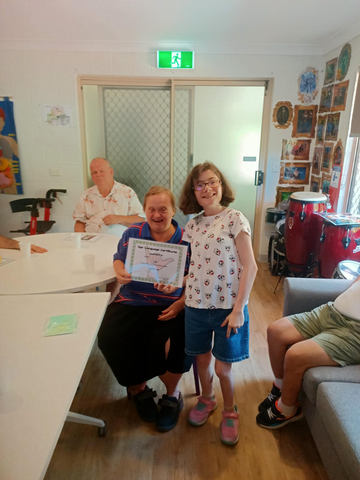
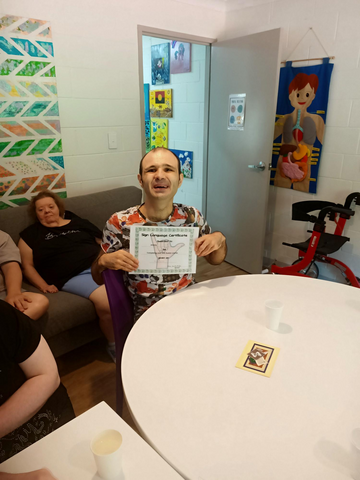
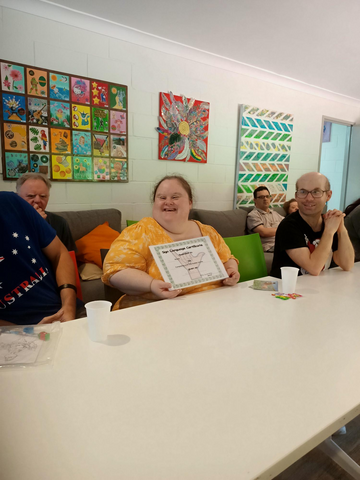
Additionally, she conducts in-person workshops every Tuesday at the Alex Hills L&L, which draws attendees from the Bowen Hills L&L. Chloe’s aspiration is to extend her classes to additional L&Ls throughout Brisbane.
For ease of reading, the word ‘deaf’ is used as a general description in this article to refer to those who are D/deaf or hard of hearing.
It is important to remember that deafness is a spectrum. People shouldn’t make assumptions about what deaf people can or can’t hear and how they prefer to communicate but rather should ask.
Chloe’s communication tips
We asked Chloe for her tips on how people can improve their communication with others who are deaf or hard of hearing. Here’s what she had to say:
All people should be treated the same. We are all one big family. But we should also be open to making adjustments to help make a d/Deaf person feel more comfortable and included.
- If I look like I’m ignoring you, maybe I just don’t know you are speaking to me. Get my attention first.
When communicating with a deaf person, get their attention first. Do not yell their name. Wave at them in their line of vision, gently tap them on the shoulder or flick a light switch on and off. - Face me when we’re having a conversation.
Try not to speak with me when you are looking at your computer screen, filling out paperwork or have your back turned.
When communicating with a deaf person, make sure you face them and maintain eye contact. This helps them to lip read and see your facial expressions. It can also help to match their eye level (i.e. sitting if they are sitting or standing if they are standing). - Consider background noises and lighting.
When lots of people are talking at once or there are loud noises in the background it makes it harder for me to understand you. It also takes more energy to block out other noises and focus on the person speaking with me.
Try communicating with a deaf person in a quiet area with good lighting so that it is easier for them to lip read and see your facial expressions and gestures. - Speak clearly and not too fast, but do not yell, exaggerate, or overpronounce words.
When I knew I was going deaf I started watching everyone’s mouths. This is how I learnt to lip read. But it can be harder to do if people speak too fast, over-mouth words, shout, or mumble.
Speak naturally and at a normal pace. Do not talk through a yawn or cover your mouth when speaking. Be expressive, but not too wordy. In other words, no mumbo jumbo! Make sure you mention the topic of the conversation first before sharing more information and give more time in between sentences to allow the person to take in what you’ve said and ask questions. - Repeat yourself or rephrase words.
If a deaf person looks confused when you are speaking to them, don’t worry, just be patient. You could ask an open-ended question to check if they’ve understood you.
If not, repeat what you said at a normal pace or try rephrasing your thoughts in a way that is easy to visually understand. You can also provide important information in writing. - Be expressive with your body gestures and facial expressions.
Deaf people gain a lot of additional information from facial expressions and hand gestures. Try not to have a deadpan face when speaking, but don’t exaggerate your facial expressions either.
Something as simple as someone raising your eyebrows up or down when speaking can say a lot to me about the context of a conversation.
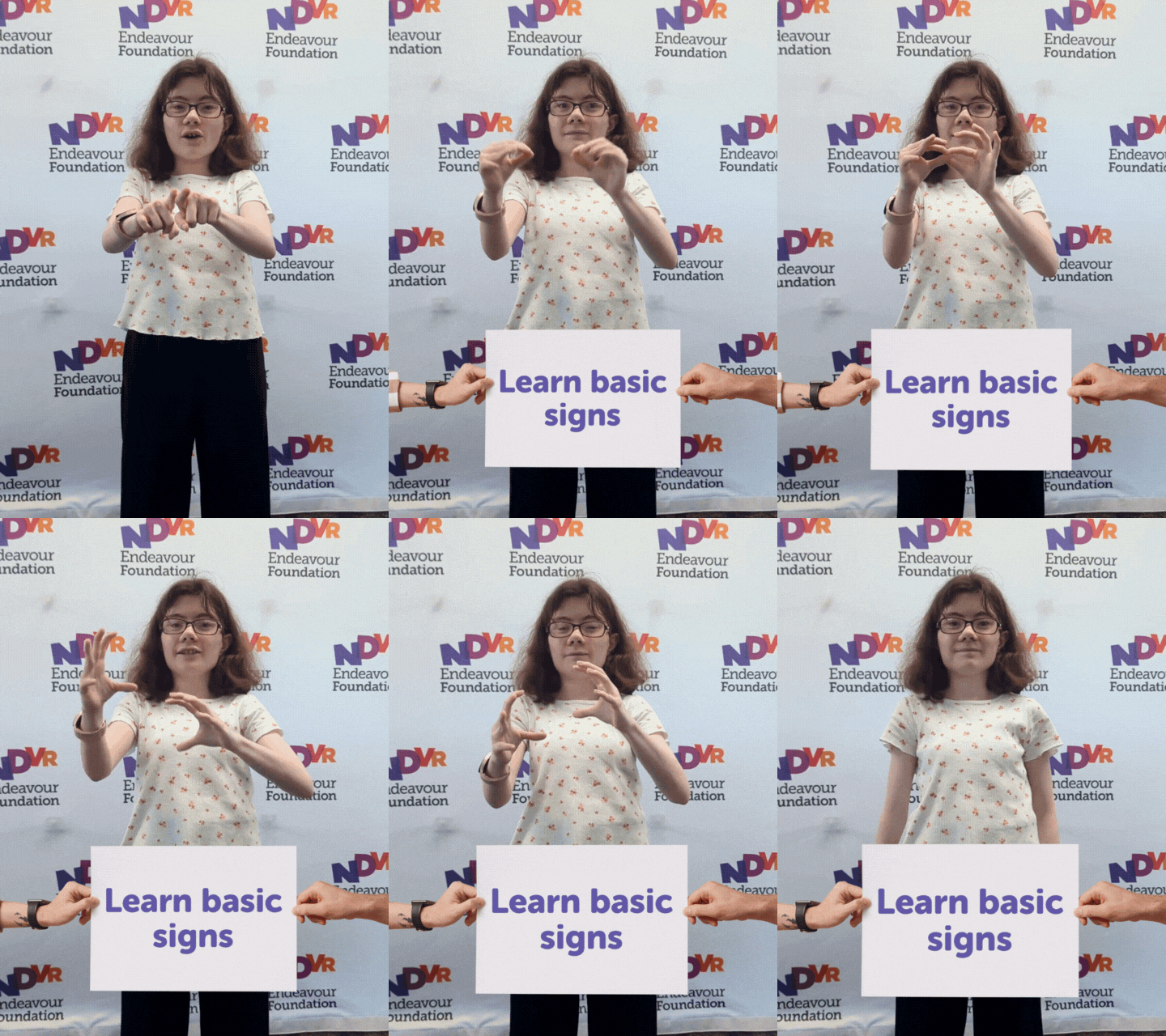
7. Learn some basic sign language.
From my personal experience, when I’m not well, I won’t talk. And one of the tools that I use when I won’t talk is Auslan.
I started teaching Auslan to staff and people we support because I wanted to not only build my skills but also give hearing and deaf people a tool that they can use if they don’t feel very well, don’t feel like talking that day or aren’t able to use their voice for whatever reason.
I would love to see everyone at Endeavour Foundation learn basic signs so they can communicate with people who use Auslan. For these people, knowing that they can communicate with anybody through sign language would improve their confidence and ability to connect with others.
Here are some initiatives and resources to support you and your team on your Auslan journey:
Learn Auslan with Chloe
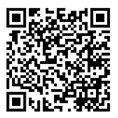
The 7-part series, ‘Learn Auslan with Chloe’, is a unique chance for us to connect and bridge the communication gap between our hearing and d/Deaf community members. The learning videos in this series are short, self-paced, and can be accessed anytime, making it convenient for everyone to participate. Scan the QR code or click here to start learning.
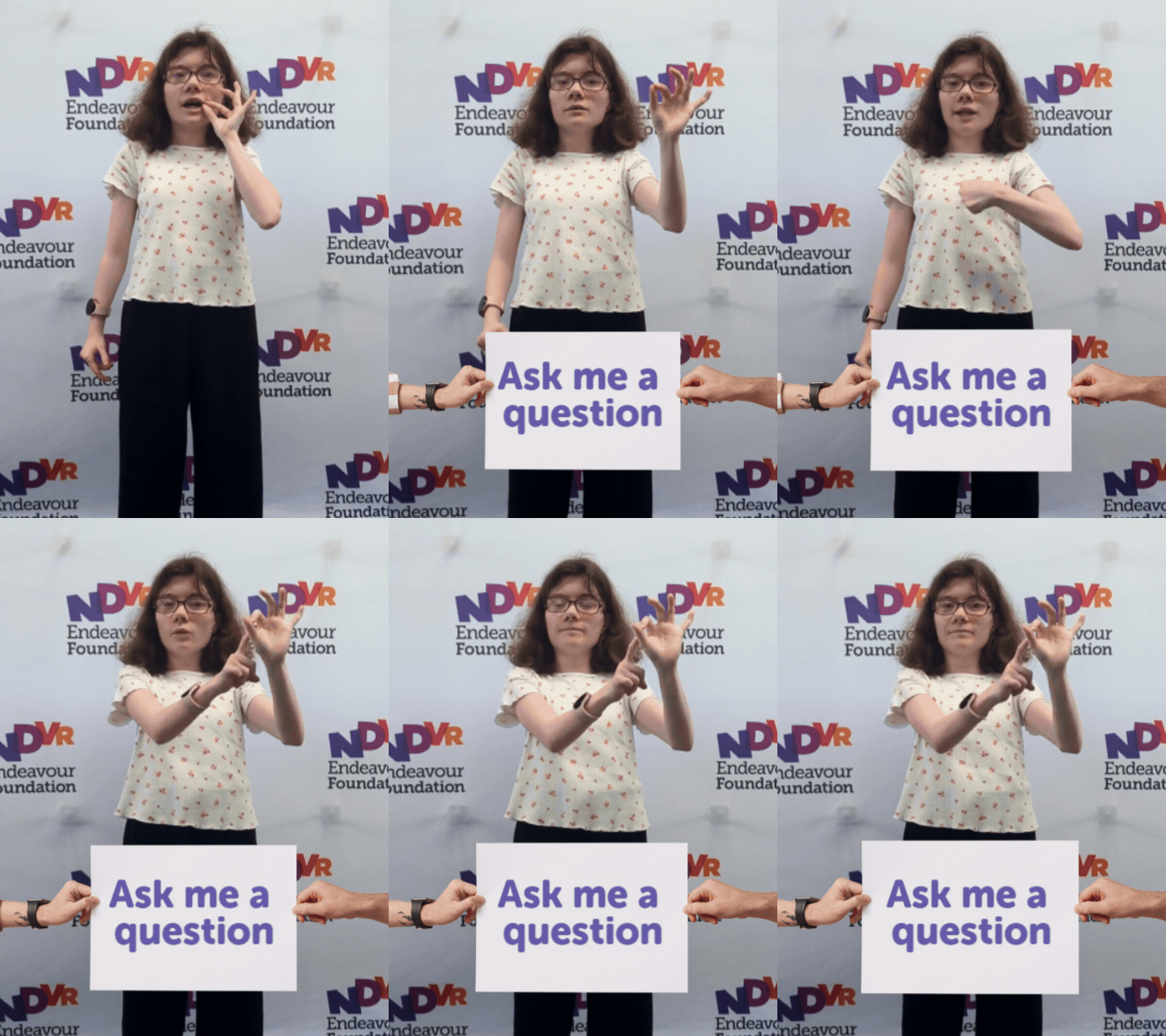
Ask Chloe a question
Chloe has a wealth of experience with teaching Auslan and tailoring classes to people with intellectual disability. Do you have an Auslan-related question? Chloe would love to assist!
By asking Chloe a question we can improve the way we communicate with people who are d/Deaf and hard of hearing. Please email [email protected] with your question and Chloe will respond to you directly. 😊
Join us in building inclusive environments where everyone feels heard.
Resources for your Auslan learning
News
View all
Director Election Expression of Interest
Are you in email overload?
Grant funding brings new life to Alex Hills L&L

BRACE proposed changes

Fire Services – Chubb Fire & Security is our new provider