Aboriginal and Torres Strait Islander peoples represent the oldest continuous cultures in human history.
They are First Australians because Aboriginal and Torres Strait Islander peoples are the first peoples of Australia.
For over 60,000 years, First Australians have evolved with the changing environments of the land.
They have formed complex social, spiritual, ecological and healing traditions. To them, the land is their mother – the giver of life – who gives them everything they need.
There are over 250 Indigenous nations, each with its own language, name and Country.
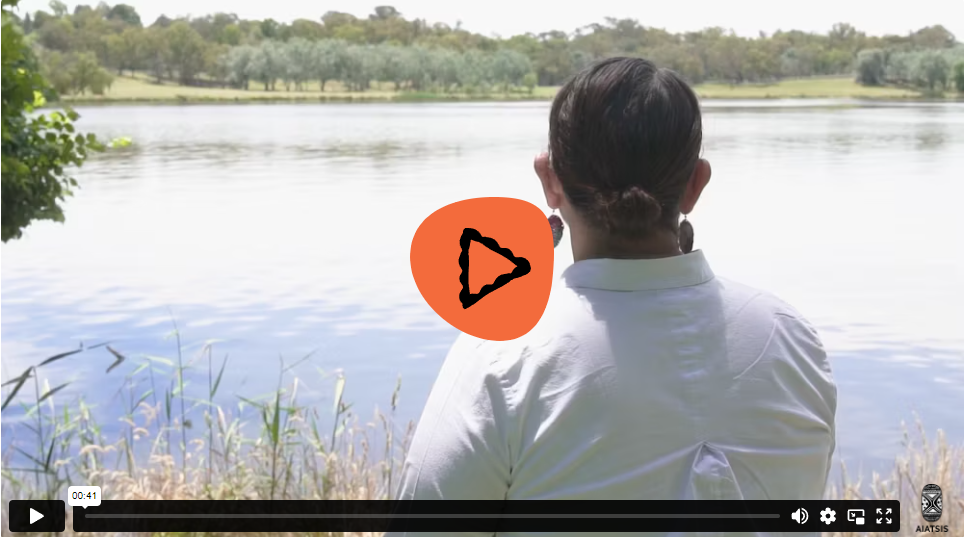
Country is the term Aboriginal peoples use to describe the lands, waterways and seas in which they are connected through ancestral ties and family origins.
Ngunnawal Elder, Jude Barlow, said:
Country is everything. It’s family. It’s life. It’s connection.
Click below to hear what Country means to her (1 min).
The role of an Elder
An Elder is someone – of any age or gender – who has gained recognition within their community as a custodian of cultural knowledge and lore, and has permission to share this knowledge. While the role of an Elder may change from one community to the other, they are identified by the common principles they uphold and pass on to their community members.
Elders have deep spirituality that touches every aspect of their lives and teachings. They live by example – by actively following established principles, values and teachings. They provide support for their communities in the form of guidance, counselling and knowledge, which help tackle issues on health, education, unemployment and racism, particularly for younger people.
They also preside over ceremonies and other spiritual practices, like Welcome To Country and smoking ceremonies.
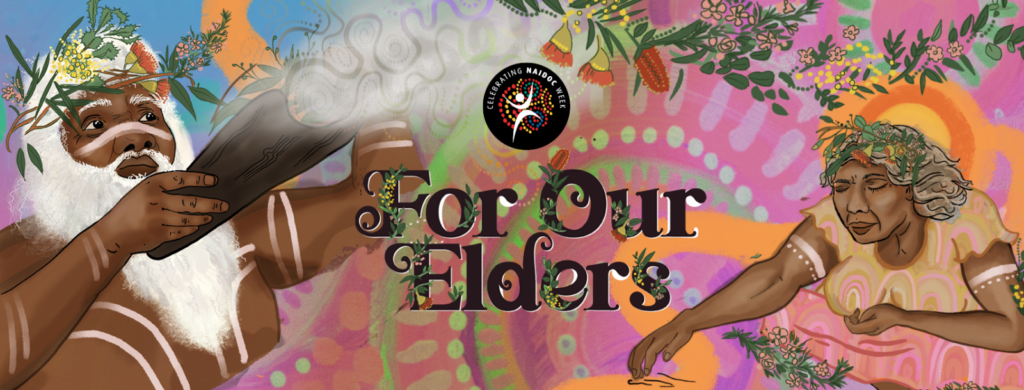
For Our Elders
The theme for 2023 NAIDOC Week (2-8 July) is For Our Elders.
This week, we encourage you to reflect on the integral role of Elders past and present in our communities.
Here are some ideas to celebrate 2023 NAIDOC Week:
- Start each day with a meaningful Acknowledgement of Country.
- Have an event at your site. Click here for activity ideas and to share your event with the #TeamPossible community.
- Attend a NAIDOC event in your community. Visit the NAIDOC website for local events.
- Attend a live Q&A virtual session with Executive General Manager for Home & Community, Leanne Rutherford and First Nations Liaison Officer at the Queensland Parliament, Elder Marjorie Elworthy on 10 July at 10am AEST (keep an eye on your work inbox for your invitation).
- Connect with an Elder in your community.
To find out who the Aboriginal or Torres Strait Islander Elders are in your community, contact your local Aboriginal Land Council. If there is not a Land Council in your area, you could contact your local Aboriginal Medical Service or another local Aboriginal organisation for more information. You could also ask Aboriginal or Torres Strait Islander people in your community or visit the Australian Government’s National Indigenous Australians Agency webpage and contact an office in your area.
Watch Bob Randall, a Yankunytjatjara Elder and traditional owner of Uluru (Ayers Rock) explain how the connectedness of every living thing to every other living thing is not just an idea, but a way of living. This way includes all beings as part of a vast family and calls us to be responsible for this family and care for the land with unconditional love and responsibility (5 min).
Elders play an important role, not just in their Indigenous community, but to all of us who call Australia home. Through their example, they show us to respect the natural world, Country and the traditions that First Australians have lived by for thousands of years.
We draw strength from their knowledge and experience, in everything from land management, cultural knowledge to justice and human rights.
Across multiple sectors like health, education, the arts, politics and everything in between, they have set the many courses we follow.
In 2023, how will you celebrate For Our Elders?
For Our Elders – Easy Read
We welcome you to share this Easy Read with people we support to improve their understanding of the role of Elders and what we can learn from them. Click below to flip through the document.
Click here to download a PDF version. You may print this Easy Read for your site.
News
View all
Director Election Expression of Interest

Are you in email overload?
Grant funding brings new life to Alex Hills L&L

BRACE proposed changes

Fire Services – Chubb Fire & Security is our new provider